Aircond Repair vs Replacement: When to Stop Fixing an Old Unit
Repair or replace your old aircond? We cover age and cost thresholds, repeat-failure signs, and the efficiency gains of newer inverter units.
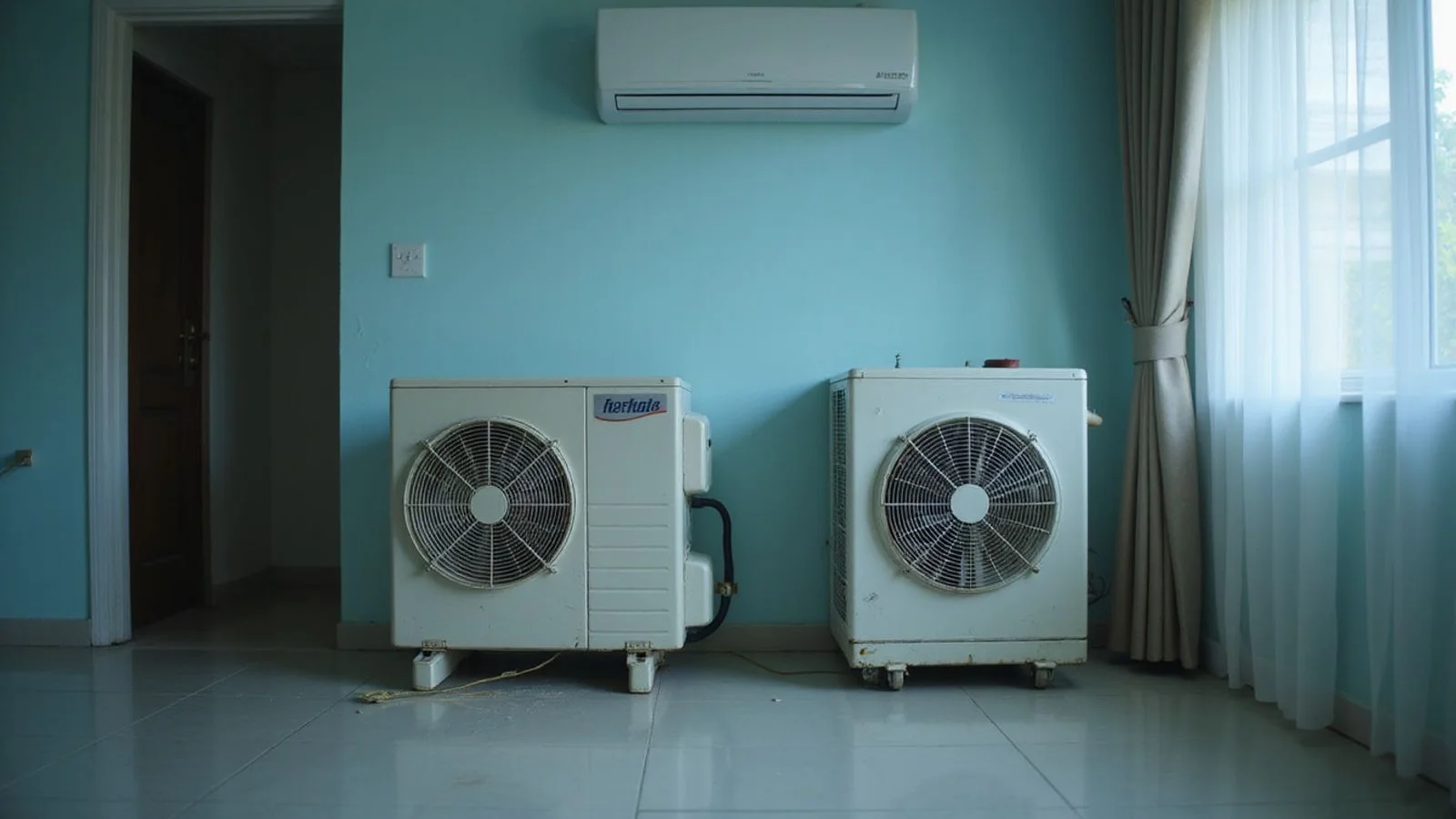
We see KL homeowners face this exact frustrating scenario every single week. You stare at a hefty repair quote for a failing unit, wondering if you are just throwing good money after bad.
When analyzing aircond repair vs replacement, the decision is rarely a simple coin toss. Our goal is to help you weigh the immediate out-of-pocket cost against long-term electricity bills and the risk of another breakdown.
Let’s look at the actual data, age limits, and failure patterns you need to evaluate right now.
We will walk you through the precise framework to ensure you make the most cost-effective choice for your property.
The 50% rule
Our team always starts with a simple financial benchmark when evaluating aircond repair vs replacement. If the fix costs more than half the price of a brand new equivalent unit, buying new usually wins.
A new 1.0 horsepower inverter aircond in 2026 typically runs between RM 1,400 and RM 2,200. An RM 800 invoice for a dead compressor or main board on an older unit hits that 50 percent mark immediately.
| Repair Quote vs New Unit Price | Recommendation | Reason |
|---|---|---|
| Less than 25% | Proceed with Repair | Cost-effective to extend the life of a maintained unit. |
| 25% to 49% | Weigh the Options | Depends on the unit’s age, refrigerant type, and TNB usage. |
| 50% or Higher | Replace the Unit | The repair investment is too high for an aging system. |
We strongly recommend replacing the machine if it is already past its eighth birthday and facing a major breakdown. This guideline serves as a helpful default rather than a strict law.
Our technicians might still suggest fixing an older unit under a few specific conditions.
- The system has a flawless track record until this specific incident.
- You maintain a strict quarterly chemical servicing schedule.
- A new installation appointment is weeks away during a local heatwave.
- You only plan to stay in the property for another twelve months.
Age thresholds
In Kuala Lumpur’s punishing climate, a typical aircond lifespan depends heavily on your maintenance routine. Malaysia’s 2026 Minimum Energy Performance Standards (MEPS) also mean newer units are vastly more efficient than older models.
We break down the expected hardware longevity into four distinct phases. These benchmarks assume you service the machine every few months.
Under 5 years
Our technicians almost always recommend fixing units in this bracket. The hardware still has years of life left, especially if it runs on modern R32 refrigerant.
Most faults at this stage involve minor, inexpensive parts like a blown capacitor or a faulty thermistor sensor. You should definitely approve the repair.
5 to 10 years
We suggest proceeding with a fix if the quoted price is reasonable. A system in this age range still offers solid performance if it receives regular chemical cleaning.
You should start setting aside a budget for an eventual upgrade, as major components naturally begin experiencing wear.
10 to 15 years
Our advice here depends entirely on the specific type of component failure. You can comfortably replace a basic capacitor or sensor at this age.
A compressor failure or a major coil leak strongly signals that you should buy a new unit, as efficiency drops significantly after a decade.
15+ years
We strongly advise replacing any unit that reaches this age, regardless of the fault. A working system from this era consumes drastically more electricity than a modern 5-star inverter model.
You are paying a massive premium on your TNB bill just to keep it running.
Failure pattern signals
A single failure rarely justifies tossing out a whole system, but a pattern of breakdowns tells a different story. If you are wondering when to replace aircond equipment, look closely at the frequency of the issues.
We look for very specific warning signs during every diagnostic visit.
Strong indicators to replace
You should upgrade if you notice these specific, recurring hardware faults.
- Two or more major repairs in 12 months: The compressor, PCB, or refrigerant lines are failing in rapid succession.
- Multiple refrigerant leaks: A single pinhole leak is manageable. Multiple leak points indicate severe copper pipe corrosion caused by KL’s high humidity.
- Compressor running without cooling: This often points to catastrophic internal mechanical damage that costs nearly as much as a new unit to fix.
- Simultaneous PCB and capacitor failure: Power surges or extreme voltage stress usually cause this, meaning the internal electronics are fried.
- Diminished cooling capacity: The room never quite reaches the target temperature anymore, showing the internal mechanisms are degrading.
Clear indicators to repair
Our diagnostic process also highlights signs of a healthy system experiencing a temporary hiccup. You should keep the unit in these straightforward scenarios.
- A single isolated electrical fault: Swap out the broken part and keep the machine running.
- Non-compressor issues under 8 years old: Fan motors and sensors are highly affordable to replace.
- Recent infrastructure investments: You lose the value of brand new copper piping or a fresh gas top-up if you swap the system prematurely.
Electricity costs change the math
Older non-inverter air conditioners consume a staggering amount of power compared to modern alternatives. Every month you keep a degraded unit running, you lock yourself into a substantially higher TNB bill.
We remind customers that Malaysia’s 2026 tariff blocks heavily penalize high electricity usage. Pushing your total household consumption above the 600 kWh threshold means you pay over 54 sen for every additional unit of power.
Upgrading to a modern 5-star inverter can reduce your cooling-related electricity consumption by up to 50 percent, easily offsetting the initial installation cost over the unit’s lifespan.
A new inverter model adjusts its compressor speed dynamically, rather than turning on and off like a fixed-speed relic. Over five years of daily use, those savings add up incredibly fast.
Our energy calculations show the TNB savings alone often cover the entire purchase price of the new system. Calculate the real financial impact honestly before making your choice.
- Estimate your monthly TNB cost attributable specifically to the aircon.
- Assume a conservative 30 percent reduction using a modern inverter model.
- Multiply that monthly saving by 60 months to find your five-year total.
- Compare that final number against the price gap between repairing and buying new.
For a heavy-use unit running every night, the energy savings make replacement the obvious financial winner.
When you should definitely replace
Certain red flags mean buying a new system is the only logical path forward. We always advise an immediate upgrade when facing these specific catastrophic failures.
- Compressor failure on a 12-year-old non-inverter: The parts are scarce, and the labor is highly intensive.
- The system uses R22 refrigerant: Malaysia’s HPMP Stage III regulations are actively phasing out this gas, making R22 extremely expensive and difficult to source in 2026.
- Corroded heat exchanger coils: Leaking gas directly from a rusted indoor coil is impossible to patch reliably.
- Four or more service visits in 18 months: You are funding your technician’s retirement instead of cooling your home.
- Insufficient cooling capacity: The machine has degraded so much that it simply cannot handle the square footage of the room anymore.
When you should definitely repair
There are plenty of situations where spending a little cash on maintenance is the smartest move. Our technicians will gladly fix a machine when the core components remain solid.
- Minor electrical faults on newer units: Replacing a capacitor, fan motor, or thermistor usually costs a fraction of a new install.
- The system has an impeccable service history: Regular chemical overhauls protect the internal components from premature wear.
- Refrigerant pressure is perfect: A sealed, leak-free copper line means the core cooling mechanism is completely healthy.
- The quote is under 25 percent of a replacement: Fixing the issue offers an excellent return on investment.
How we approach it
Our aircond repair team provides straightforward, data-driven answers. You deserve to know if a machine is genuinely beyond saving.
We will immediately inform you if the hardware is too degraded and suggest an installation quote instead. Nobody benefits from a patch job that falls apart again in three months.
Get a clear recommendation
Making the final call on aircond repair vs replacement does not have to be stressful. We encourage you to WhatsApp us at +60 14-302 9055 with your machine’s brand, estimated age, and current symptoms.
A quick photo of the indoor unit and the specific error code helps our team immensely. Our service coordinators will analyze the details and give you an honest recommendation.
You will receive concrete estimates for both options, so reach out today to secure a financially sound solution for your space.
Need this service done?
See our Aircond Repair & Diagnostics →