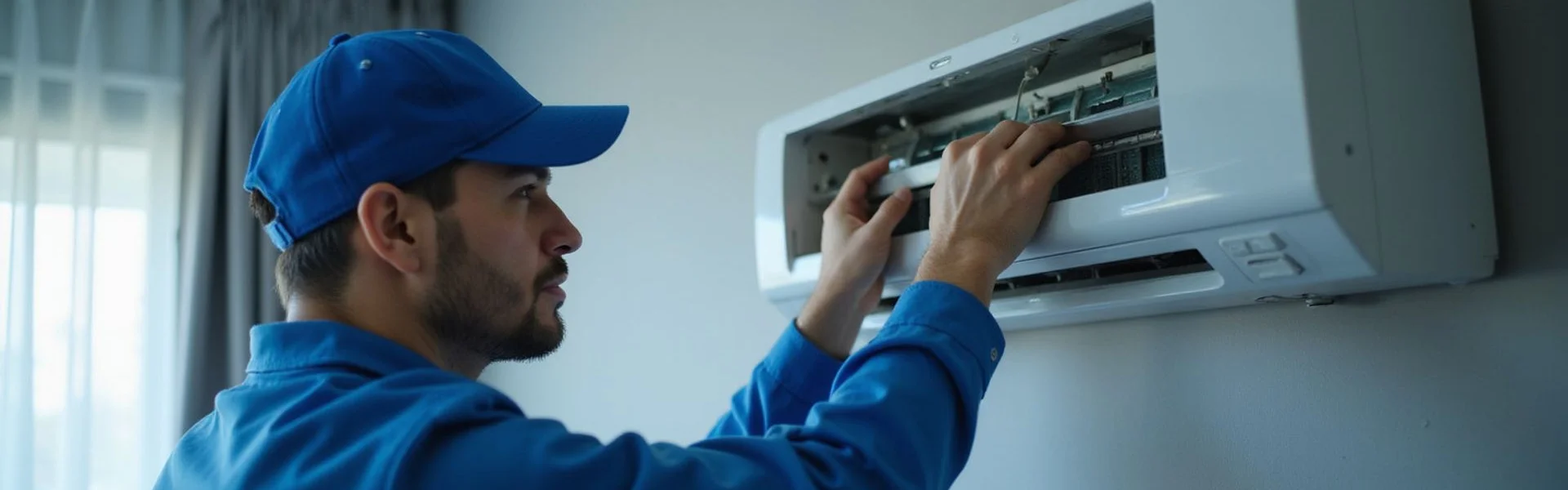
Why Is My Aircond Making Loud Noises or Vibrating?
Aircond rattling, humming, or vibrating? Learn what each noise means — fan, bearing, compressor, or loose mount — and when it's urgent.

An aircond should run with a steady, gentle airflow noise. When that changes — new rattles, hums, or vibrations — the unit is telling you something is wearing or failing. Each noise points to a different cause.
Here’s how to decode what your aircond is trying to tell you.
Common noises and what they mean
Rattle (intermittent or rhythmic)
A rattle that comes and goes during operation usually means something is loose — and being shaken by the airflow or compressor vibration. Common causes:
- Loose front cover or filter (very common, easy fix)
- Loose mounting bracket on the indoor unit
- A panel screw that’s worked free
- The outdoor unit’s metal casing vibrating against its mount
- Loose copper piping
Severity: low to medium. Fix it before it loosens further and damages nearby components.
Hum or buzz (continuous)
A continuous hum or buzz often means an electrical component is struggling. The most common cause is a failing capacitor — it can’t quite start the compressor or fan cleanly, so it hums instead.
You’ll often hear it most strongly at start-up, then it eases off (if the compressor catches) or persists (if the compressor doesn’t start at all).
Severity: medium to high. A failing capacitor is cheap to replace quickly; a failing compressor that’s been running with a bad capacitor is expensive.
High-pitched whistle or hiss
A whistle or hiss is usually airflow finding a small gap — either a loose seal, a deformed coil fin, or a small refrigerant leak. Refrigerant leaks are the most concerning because they affect cooling.
Severity: medium. If cooling is dropping at the same time, treat it as a refrigerant leak and call a technician.
Bearing noise (grinding or whining)
A grinding or whining sound that increases with fan speed points to a fan bearing wearing out. Indoor fan bearings tend to whine; outdoor fan bearings tend to grind.
Severity: medium. The bearing won’t fix itself, and a seized bearing can shred the fan motor. Schedule a diagnosis within a week or two.
Clicking or clunking
A periodic click during operation is often a relay switching. If it’s new, the relay may be failing. A heavy clunk from the outdoor unit when it starts can mean the compressor is having trouble starting cleanly.
Severity: medium to high. Don’t ignore a clunk from the outdoor unit.
Vibration (no noise, but the unit shakes)
If the indoor unit visibly vibrates, the mounting bracket may have loosened or the fan wheel is unbalanced (often from accumulated dust on the blades). For outdoor units, vibration usually means the compressor mounts have degraded or the unit isn’t level.
Severity: medium. Vibration shortens the life of every connected component — piping, mountings, electrical connections.
Quick owner checks
Before booking a technician, try:
- Switch off and inspect. Power off, look at the front cover — is it seated correctly? Tap it gently to see if anything obviously moves.
- Pull and reinstall the filter. A poorly seated filter rattles easily.
- Check the outdoor unit. Is it level? Are leaves or debris caught in the fan?
- Listen during start-up. Does the noise happen only on start, only during running, or only at shutdown? Each timing points to a different cause.
If the noise persists, it’s diagnosis time.
When the noise is urgent
Don’t keep running the unit when:
- The breaker trips after starting
- You smell burning electrical insulation
- You see smoke from the outdoor unit
- Cooling has stopped along with the new noise
- Water leaks at the same time as the noise
These are urgent. Switch the unit off at the breaker and call a technician.
How a technician diagnoses noise
When we arrive at a noise diagnosis, we usually:
- Listen with the unit running to localise the source
- Switch off and inspect mountings, panels, and fan blades
- Check the capacitor with a multimeter for capacitance and ESR
- Spin the fan blades by hand to feel for bearing roughness
- Look at compressor mounts on the outdoor unit
- Check refrigerant pressure if a hiss or whistle is involved
The fix depends on the cause — sometimes just a tightened screw, sometimes a capacitor swap, sometimes a fan motor replacement.
Our aircond repair and diagnostics team handles all of these. We diagnose first, quote second, and explain what’s actually wrong before any work.
Don’t wait it out
The “I’ll deal with it later” approach costs more in the long run. WhatsApp us a short voice recording of the noise (or even just a description) and we’ll give you a rough idea of severity before sending a technician.
Need this service done?
See our Aircond Repair & Diagnostics →